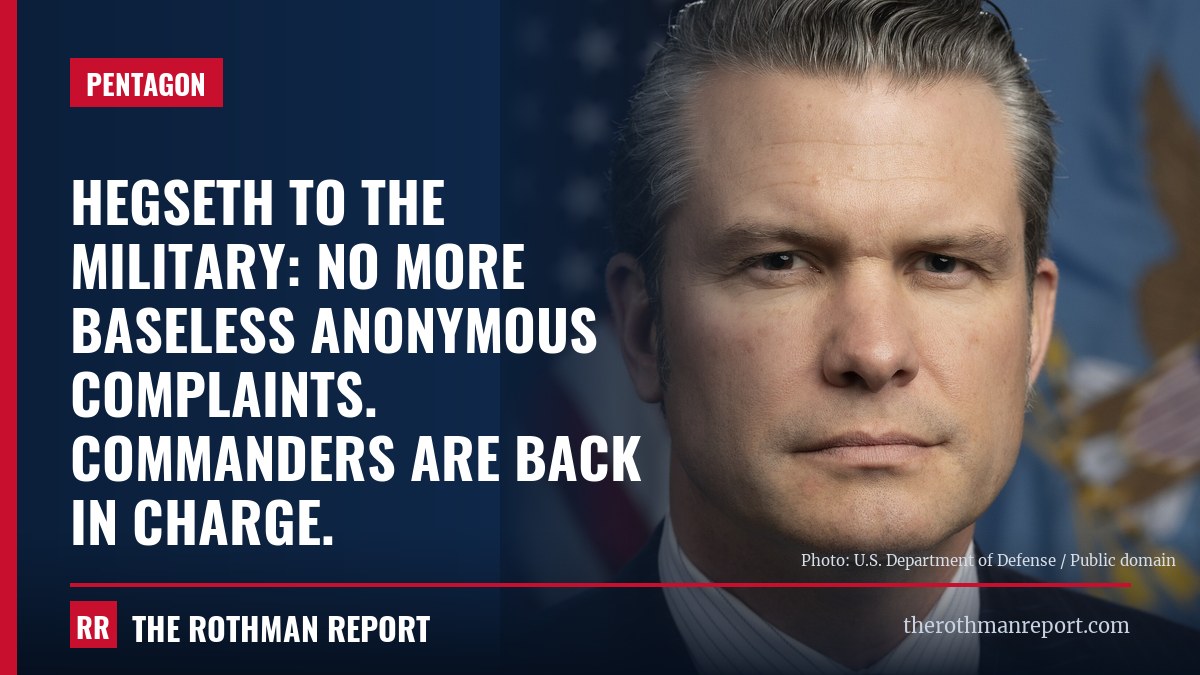

Defense Secretary Pete Hegseth has ordered every military department to bring its inspector general complaint system in line with a Pentagon policy that sharply limits anonymous allegations and hands authority back to commanders. In a video message released Tuesday, Oct. 6, Hegseth put it in five words: “Commanders are now back in charge.”
The directive takes aim at a system Hegseth says was turned into a weapon. According to The Washington Times, he said “activists, poor performers, and malcontents” hijacked the inspector general process by filing frivolous complaints that gummed up the works, and that “Commanders were contending with attorneys and human resources functionaries.”
What the new order does
The heart of the change is a credibility screen. Under the policy, an inspector general inquiry should no longer open on the strength of “speculation, personal gripes, or hearsay,” as Hegseth put it. A complaint has to clear a credible-evidence bar first.
Anonymous complaints are not abolished, but they are narrowed. “Anonymous complaints will only be considered when they allege fraud, waste, and abuse or when anonymous allegations provide specific, credible evidence of substantial wrongdoing,” Hegseth said. “Otherwise, no more baseless anonymous complaints.” Military.com reported that the carve-out also covers allegations of unlawful conduct or a substantial and specific danger to public health or safety.
The policy also covers equal opportunity complaints, according to OAF Nation, and it is explicit that real misconduct, including harassment and racism, must still be addressed. What changes is that commanders can enforce standards on appearance, fitness, discipline and performance without being dragged into an investigation simply because someone did not like a lawful order. The Pentagon did not immediately tell Military.com when the change takes effect.
Built on the 2025 overhaul
The new order is the second stage of a fight Hegseth started more than a year ago. On Sept. 30, 2025, speaking to senior military leaders at Marine Corps Base Quantico, he said the inspector general process “has been weaponized — putting complainers, ideologues and poor performers in the driver’s seat,” according to the Associated Press.
The memo he signed that day, part of what the Pentagon called its “No More Walking on Eggshells” campaign, directed the Army, Navy and Air Force secretaries to work with the Defense Department’s Office of Inspector General on faster, tighter investigations. As MeriTalk reported at the time, it set a mandatory seven-day credibility assessment for every complaint, required non-credible complaints to be dismissed, treated complaints filed more than a year after the alleged incident without new evidence as non-credible, and called for repeat or frivolous complainants to be tracked and face heightened scrutiny. The AP reported that the memo told the inspector general to identify complainants rather than let them remain anonymous.
The services have already started moving. In August 2026, according to Military.com, the Navy and Marine Corps ended anonymous reporting for most discrimination and harassment complaints. The new directive tells every department to get on the same page.
The critics
Whistleblower advocates have opposed the overhaul from the start. When the 2025 memo came out, Whistleblower Aid called it a “coordinated assault against oversight, accountability, and lawful whistleblowers.” Andrew Bakaj, the group’s chief legal counsel and a former senior investigator in the inspector general’s office, told MeriTalk: “This is not a procedural shift – it is a direct assault on the whistleblower disclosure and protection system.”
Former Air Force chief prosecutor Don Christensen questioned the premise, telling the AP, “I don’t know of any data that shows there’s a crisis of serial complaints.” Rachel VanLandingham, a former Air Force lawyer, said, “Survey after survey after survey has shown that service members are afraid of their own command chain.” The advocacy group Protect Our Defenders has called the rollback of anonymous reporting protections “reckless and dangerous,” Military.com reported.
Why it matters
Those concerns deserve a hearing, and the policy answers the strongest of them: complaints alleging fraud, waste, abuse or real danger still get in the door, anonymous or not. What no longer gets in the door is the grudge. Under the system Hegseth describes, one disgruntled subordinate could tie a commander up with attorneys and investigators on the strength of a gripe, with no evidence required, while the unit waited.
A military cannot be led by people who are afraid of their own paperwork. An inspector general system exists to catch fraud and abuse, not to give poor performers a veto over the officers who hold them to standard. Requiring evidence before an investigation starts is not hostility to oversight. It is how a serious investigation is supposed to begin.
The test will be in execution. If the credibility screen is applied honestly, legitimate whistleblowers lose nothing, and commanders get back the time they were spending on lawyers instead of readiness. Hegseth is betting that the force will be stronger for it, and that troops with a real problem will still be heard.
An accusation without evidence is not oversight, and the Pentagon has finally stopped treating it like one.
Sources
- The Washington Times: Hegseth orders revamp of military's inspectors general system (Oct. 7, 2026)
- Military.com: Pete Hegseth announces major overhaul of military's investigative process (Oct. 8, 2026)
- OAF Nation: Hegseth orders IG complaint overhaul (Oct. 8, 2026)
- MeriTalk: Hegseth orders IG overhaul, sparks oversight alarm (Oct. 3, 2025)
- Associated Press via Military.com: As Hegseth orders changes to the Pentagon watchdog, advocates say it will silence complaints (Oct. 3, 2025)
More from The Rothman Report
 Lifelong Democrat Sheriff Quits the Party After Locals Told Him to Leave for Backing Rogers and James
 Taco Bell Coworker’s Tip Stopped a Self-Described Neo-Nazi’s Alleged Plot Against an Aurora Hindu Temple
 Paralympian Veteran Waited 5 Years for a Wheelchair Lift. She Says Canada Offered Her Assisted Death.